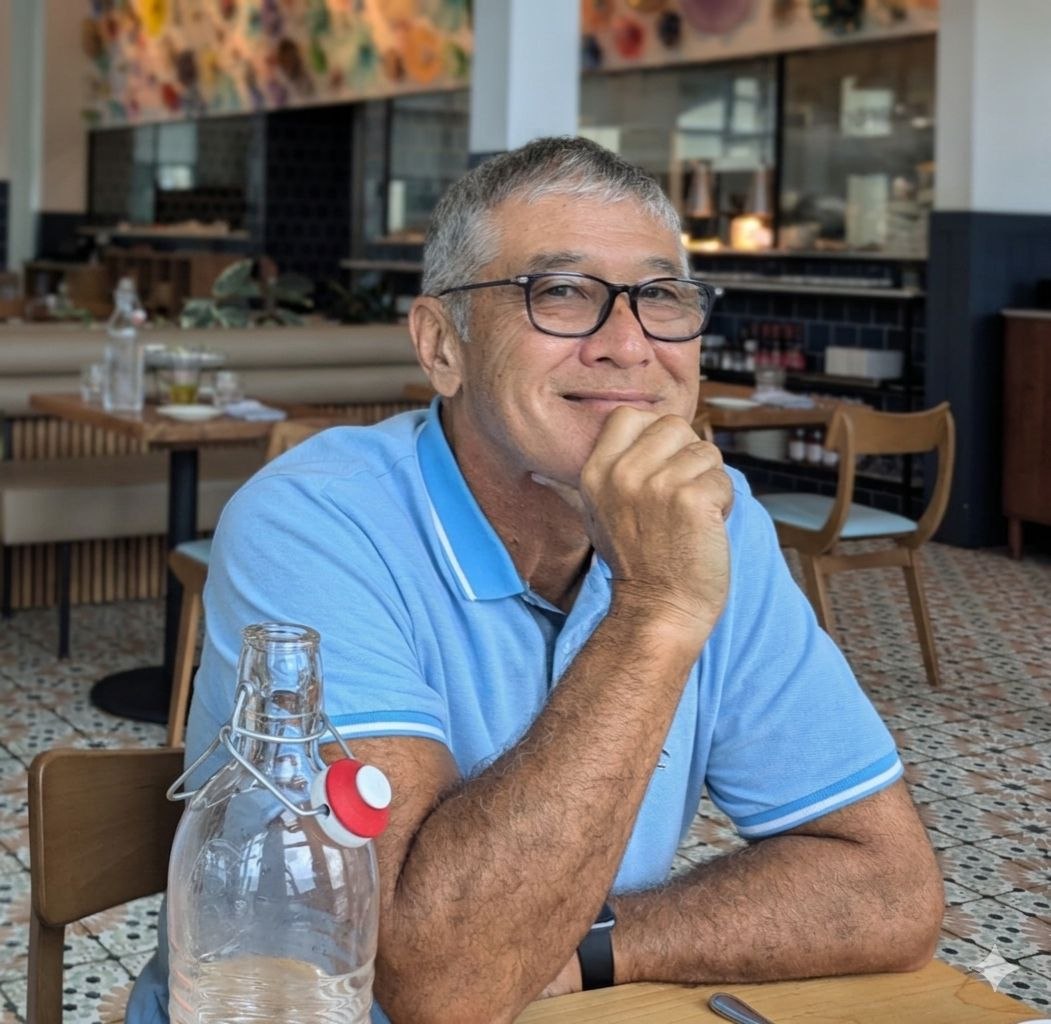
The Lessons from My Father
Dad wasn’t one to preach or lecture. And trust me, I deserved it.
In his final weeks, someone asked Dad what career he would’ve chosen if he could do it all over again. He said he’d be a coach. I hadn’t heard him say that before. It’s not that I didn’t know he loved sports and activity. I knew he’d coached before, and I knew he loved the idea of people really pursuing their true potential. But Dad didn’t like to yell. He didn’t like to tell you what to do. He didn’t like being a manager of people. He didn’t like hierarchy or class structure. So “coach” was news to me.
But I’ve heard many of you say you want to be more like Jimmy. Between some long conversations in the hospital and forty years of observing and interpreting Dad at his best and his worst, we landed on three signature strengths. Three things he thinks anyone can benefit from practicing.
-
Radical acceptance. This one’s first because it’s the hardest. Most of us aren’t wired for this the way Dad was, but even he practiced it. And it’s the one where the practice pays off the most. Dad accepted people exactly as they were. He believed every person is wired differently, and you could never fully understand what was going on inside someone else’s head. So he didn’t judge, didn’t rank, didn’t try to change anyone. He gave everyone the same right to exist, the same dignity, no matter where they came from. People sometimes confuse this with empathy, but I think it’s almost the opposite. Empathy is the respect you offer because you think you know how someone feels. Radical acceptance is the respect you offer because you know you don’t, and you’ve decided that’s okay. It doesn’t make one of you better or worse. It just means understanding each other is hard, and that’s not a good enough reason to withhold dignity from anyone.
-
Be genuinely curious. That acceptance fueled a real curiosity about people and about life itself. Dad wanted to understand where others were coming from without trying to fix or motivate them to be different. The listening was just the natural byproduct. And that curiosity stayed with him until the end, whether he was teaching himself new skills around the house or, in his final months, picking up Pokémon Go just because it looked like a fun way to stay active. Here’s the thing about being curious: the outcomes are all good. When you’re curious about people, you’re a good listener, and they feel seen. When you’re curious about topics, you become interesting, and your knowledge diversifies. When you’re curious about how things work, you become handy. Dad fixed a lot of random things for a lot of people, often as a surprise, often as a small act of kindness. Genuine curiosity pays off in every direction.
-
Commit to your own happiness. This one eluded me the longest. Dad spent decades in the accumulation phase, working hard as a blue-collar man in a white-collar world, living frugally, saving quietly, postponing joy. For a long time I confused all that with work ethic and diligence. He had plenty of both, and nobody who knew him will doubt it. But when he retired and he and my stepmom moved to Del Webb, which I for one thought was a silly idea, I watched him unabashedly pivot toward happiness. The community, the circle of friends, the day drinking, the traveling. They were doing more than I ever pictured old people wanting to do. Twenty years earlier I would have been encouraging him to do all of it and never expecting he actually would. Lori put it plainly: their job was to stay active and stay alive as long as they could. That was the commitment. Dad talked about it the same way later in life and in the hospital, more like a life plan he was executing than a retirement. The lesson isn’t that he stopped working hard. It’s that he and Lori pointed that same work ethic at something new, together. Their marriage, their community, their joy. Retirement wasn’t the end of the job. It was a commitment to a different one.
A coach would want you thinking about your legacy. And a legacy, for most of us, is nothing more than what the survivors remember about our actions. That’s a little dark, but it’s also the point. It means your legacy is built out of what you do with your time and where you spend your effort.
I’m calling these lessons on purpose. Not traits, not gifts, not something Dad was born with and the rest of us weren’t. Lessons. Muscles. You train them by practicing them. Dad was never going to preach any of this. He was going to show you what he thought the right way looked like. And we got a hell of a show.
Sometimes, being his son, he let me in on the secret he was displaying for anyone paying attention: anybody can act like this, anybody can behave this way, anybody can bring themselves joy in service of others.
If you’re feeling the loss right now, you might also be realizing something else. You didn’t just want to be around him. You wanted to be a little like him. If that’s true, the playbook is yours now. It’s time to train.